Posted
on June 5, 2010, 6:23 PM,
by jfriedman,
under
Andrea Witzmann,
Austrian art,
Dorit Margreiter,
Marcus Schinwald,
Maria Hahnenkamp,
Sabine Bitter/Helmut Weber,
Tokyo Wonder Site,
Ursula Mayer.
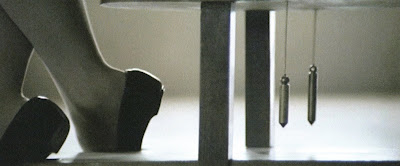
Markus Schinwald, Ten in Love, 2006, 35mm film on DVD, 4’37“
The Tokyo Wonder Site in Shibuya is hosting an exhibition of (mostly) video and photo art by eight Austrian artists. The show examines how the country’s psychoanalytical heritage, that came to be seen as one of its biggest cultural imports, relates to the varying notions of “Metropolis.” The Vienna and Vancouver-based duo Bitter and Weber are represented by several digital collages where urban images are comprised of typographic symbols and letters. Their images feature an interplay of patterns that change depending on the viewer’s proximity and the level of visual concentration; same goes for Maria Hahnenkamp’s lush pigment prints. Architectural settings of Aglaia Konrad’s and Andrea Witzmann’s respective video and c-print contributions can alternate between functioning as main subjects or auxiliary elements. Dorit Margreiter’s Pavillion (2009), a 35 mm film, scrutinizes the intersection of architecture and gender, while Ursula Mayer’s Fallen Imperial video installation from 2003 focuses exclusively on gender—perhaps an inevitable nod to the discourse born of the investigations into the psyche of the sexes. I particularly liked Markus Schinwald’s room where the Ten in Love video (2006) provided a futuristic backdrop for the wistfully old-fashioned representations of obscurity in his 2007 wood and metal sculpture Legs (Untitled), and the 2010 pigment prints of Lukas, Magnus, Nicklaus and Gunter. The latter echo Max Klinger’s prefiguration of fetishism in his 1881 series Ein Handschuh (A Glove).
This project is a part of the Austria-Japan Friendship Year which rendered several other quality exhibitions. There is also a handsomely printed bilingual catalogue available for purchase.
Comments Off on "PSYCHOANALYSIS: Gazes on Photo and Video Art from Austria"
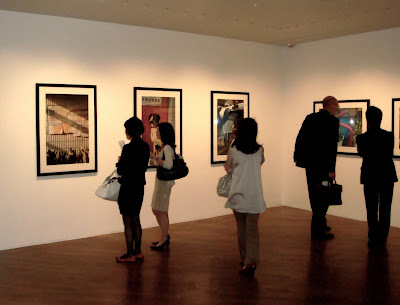
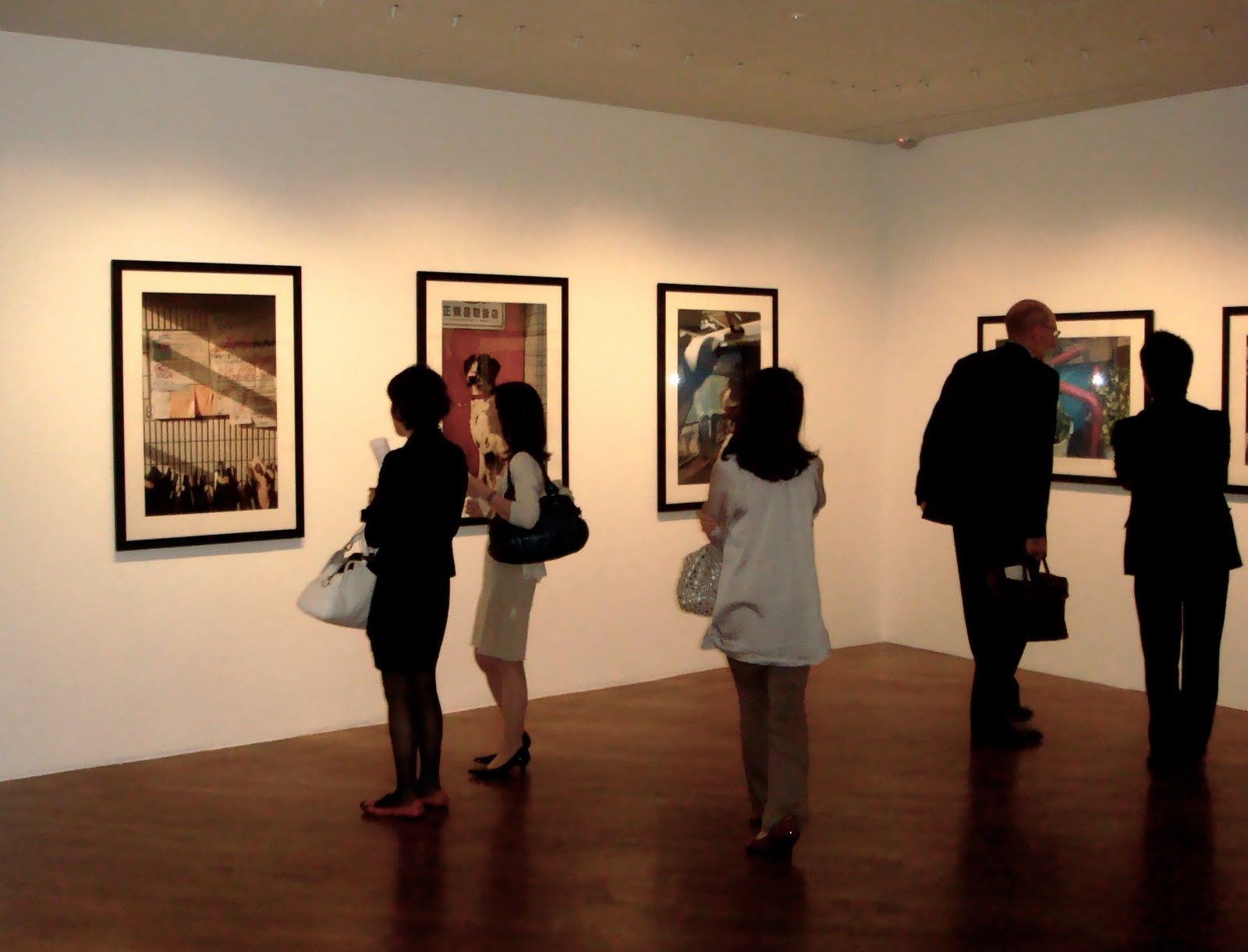
Last night the Hara Museum of Contemporary Art inaugurated the exhibition of William Eggleston’s photographs and drawings—the artist’s first solo museum show in Japan. The majority of the work on view comes from the two recent series shot in Paris and Kyoto respectively. Among the photographs are light jet prints and type-C prints, many framed together with a pendant drawing. One of the galleries is devoted entirely to the 1976 William Eggleston’s Guide shown the same year at the MoMA in New York. The Hara exhibition is backed by two collections: the Cartier Foundation and of the Tokyo Metropolitan Museum of Photography. The show will be open through August 22. If you visit on Sunday you can take advantage of the “BloomBus” shuttle that runs between the museum and the Shinagawa station.
Comments Off on "William Eggleston: Paris-Kyoto"
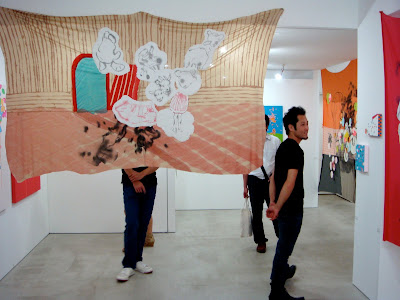
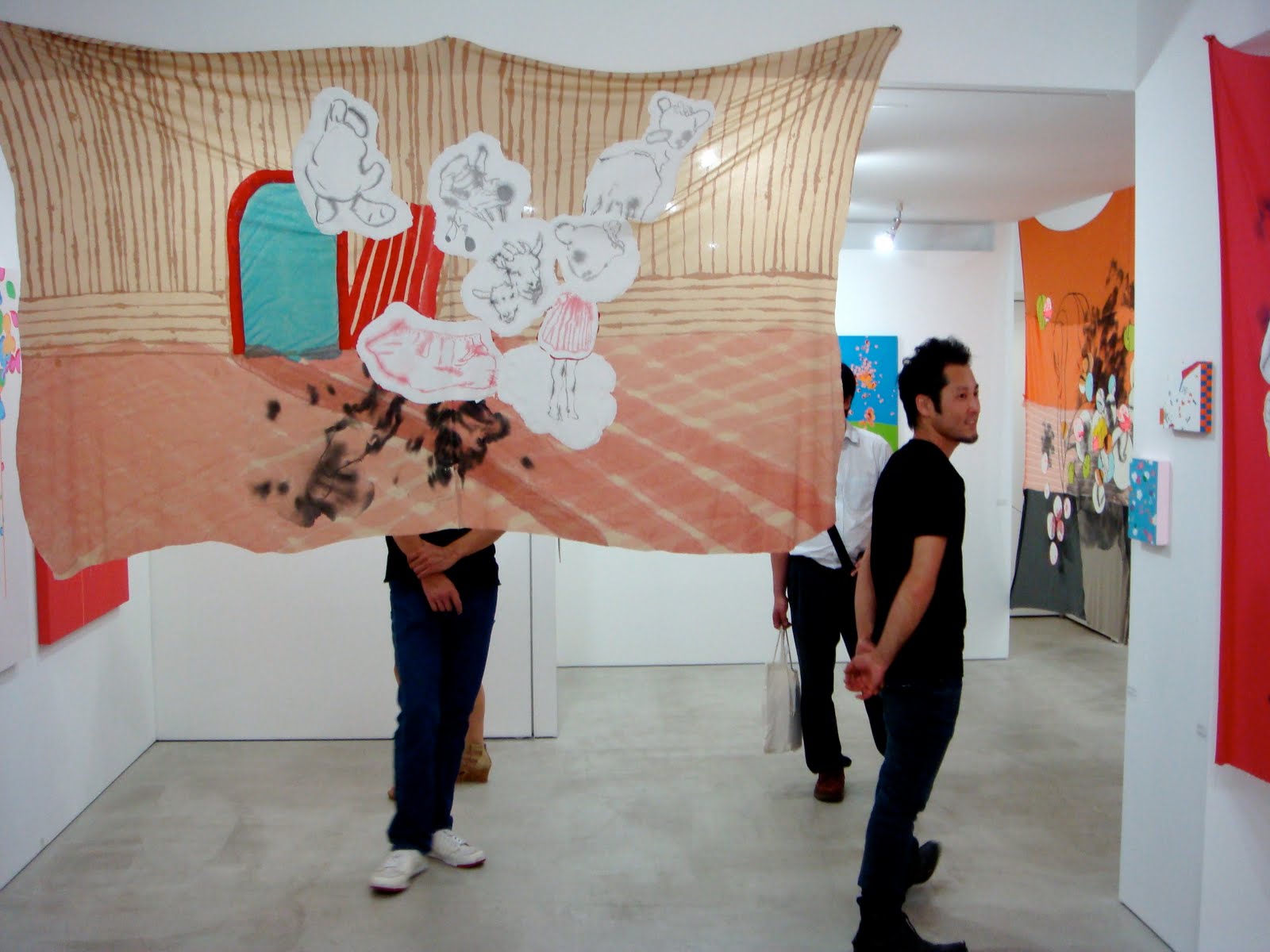
The Tokyo branch of the Kodama Gallery is now showing the last nine years of Mamoru Sakagawa’s work. The objects range from the 2001 acrylics of muscle men, to drawings, to the latest experiments with india ink and fabric appliqué. The oldest works, interestingly enough, suggest a loosely visceral quality in the artist’s approach: it is as if even when the actual anatomical visualization disappeared, the physicality transferred into the very process of looking.
Comments Off on Mamoru Sakagawa Retrospective

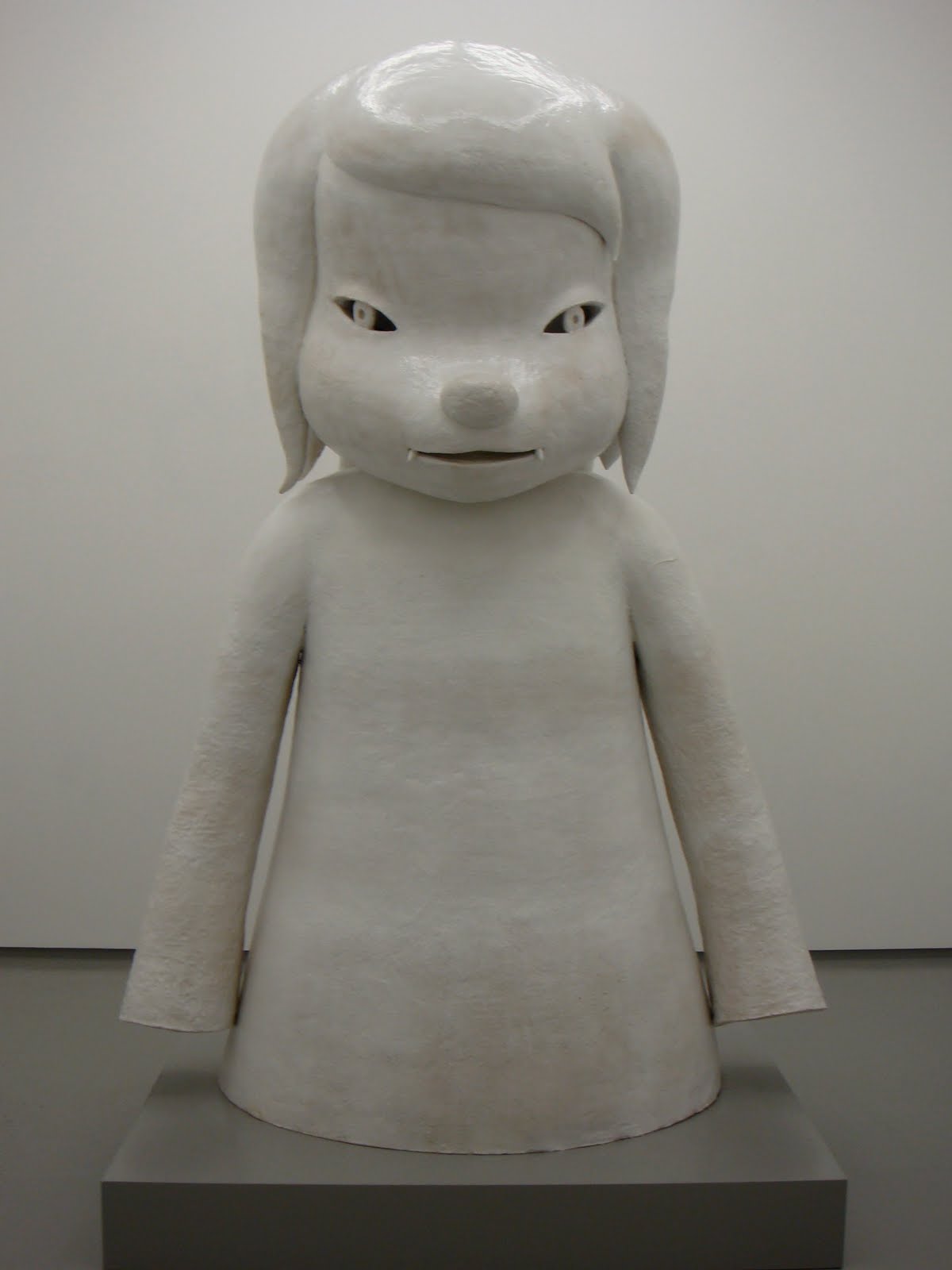
Yoshitomo Nara
White Riot
2010
ceramic
h.278 x w.176 x d.126 cm
If you have not seen it yet, Tomio Koyama gallery is showing Nara’s recent experimentation with ceramics. The seventh floor gallery features a selection of oversized sculpture. White Riot takes up the smaller gallery on the left, it sort of springs up at the viewer as they enter the room. The vast space next door houses three oversized heads decorated with platinum, gold and silver liquid, one even sporting a colorful fabric scarf. The gallery on the sixth is filled with inscribed pottery in black and white design. Here too, the objects are shaped as figurines (or vice versa), and the tongue-in-cheek inscriptions serve as a legend to these ghoulish but cute characters.
This exhibition will be on view through June 19th.
Comments Off on Yoshitomo Nara: Ceramic Works
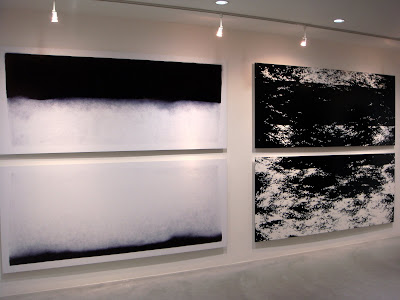
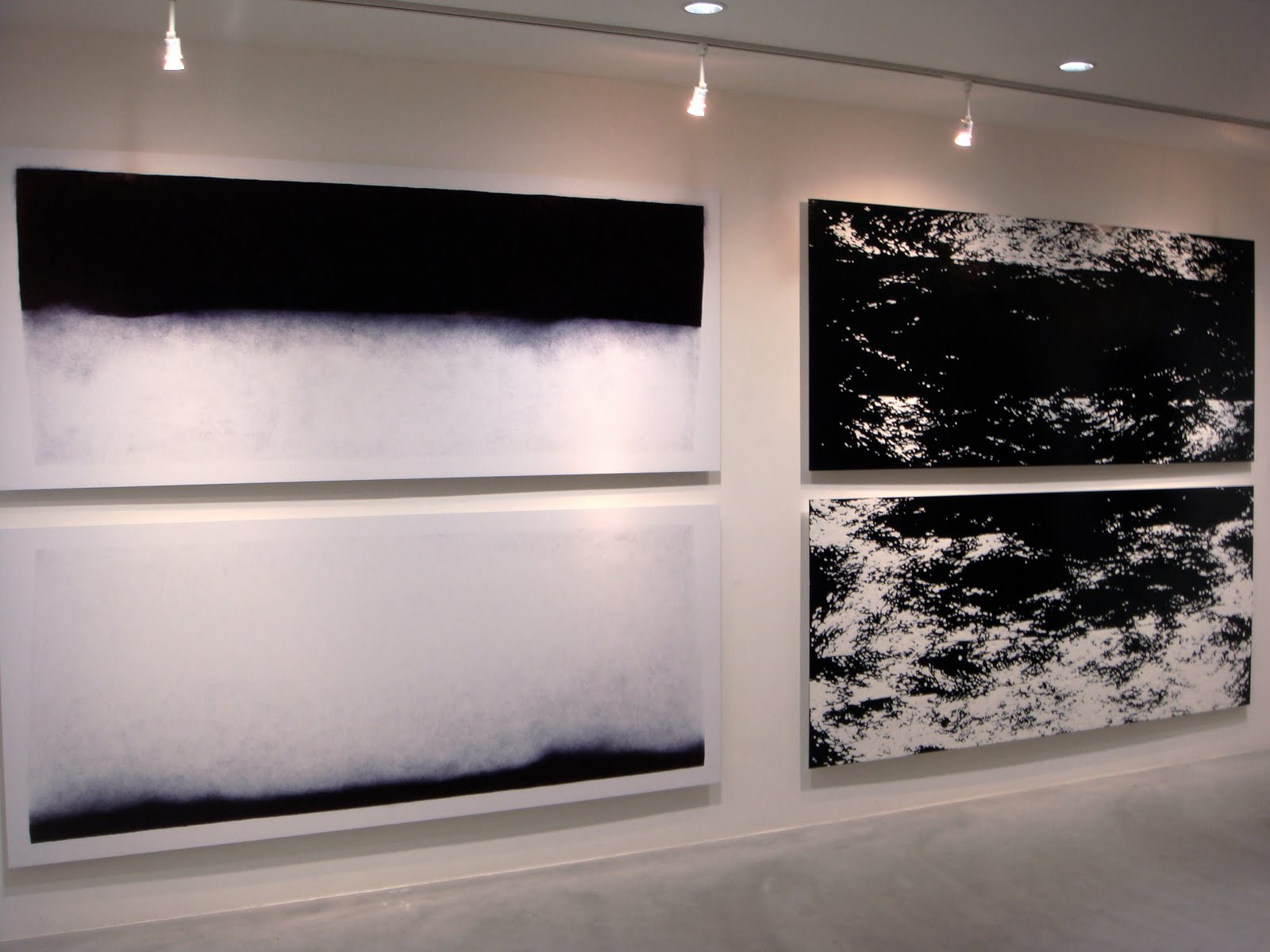
Installation view. Left: Chihiro Kabata. Right: Yuuri Kabata.
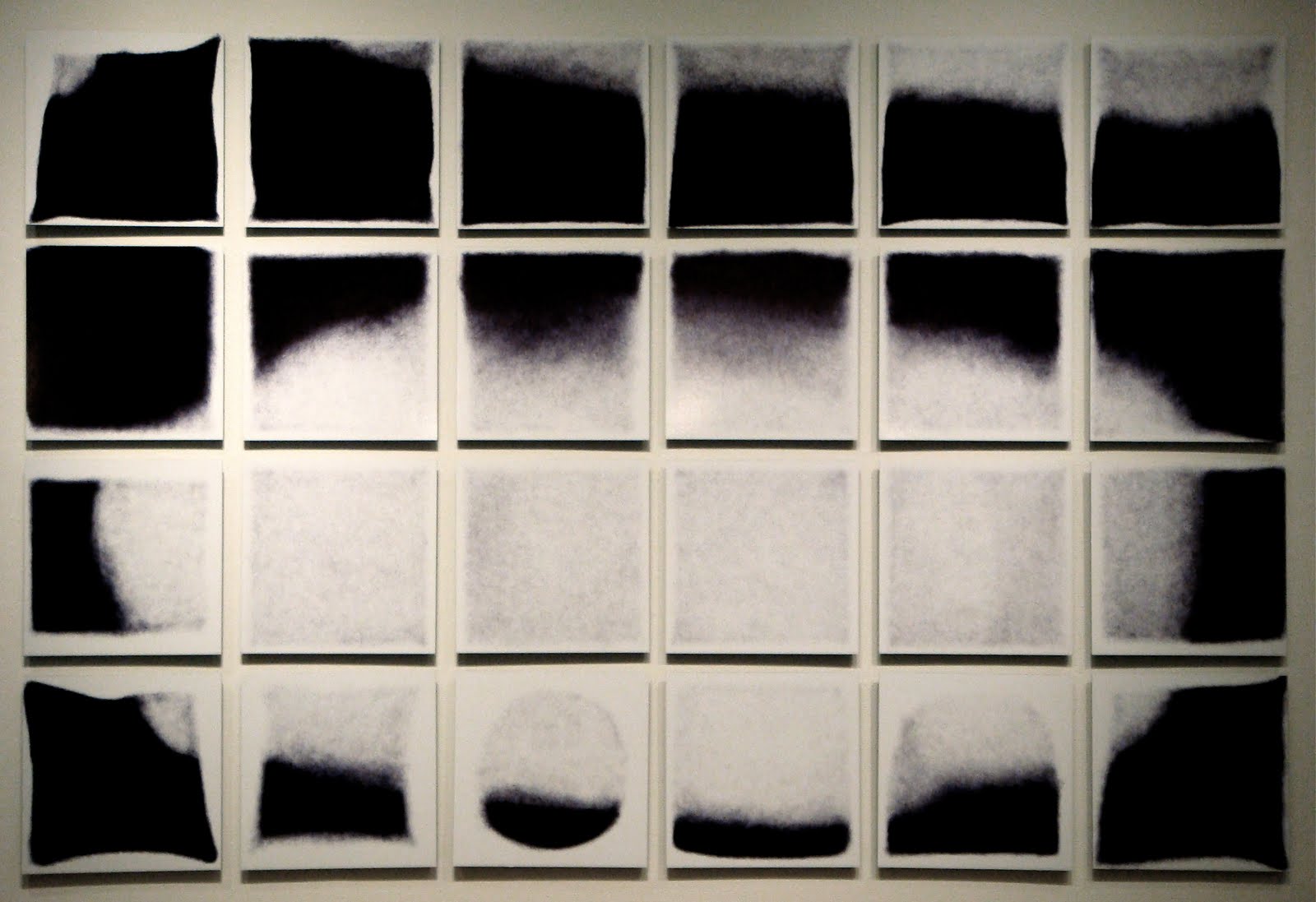
The Art Front Gallery is now holding an exhibition of the works made by two sisters: Chihiro and Yuuri Kabata. The two share a studio and their work may well be seen as a creative dialogue that scrutinizes color and space. The majority of the works are displayed in the two separate galleries within the main location, with one larger, rented space a short walk away, housing Chihiro Kabata’s large-scale composistion which consists of twenty-four separate panels.
Chihiro Kabata’s medium of choice is deceptively humble—she works in ball-point pen on paper—makes the commanding final result all the more surprising. The ink appears to hover over the surface of the support, de-facto realizing the metaphor of ukiyo-e: the shapes in her images become “the floating world.” It is especially clear in the form-shifting panels of the largest work in the exhibition.
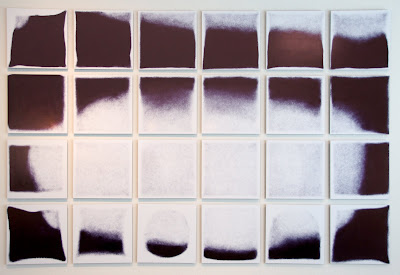
Chihiro Kabata, ball point pen on ink jet paper, 24 individual panels.
When the individual panels are fitted together they compose what an elliptical gap of light amidst the inky darkness, but the arrangement should not be seen as finite because the upper left portion of the composition indicates that the gap would repeat itself if more panels were added, extending the oval motif for as long as a wall would permit. The panels, then, become something akin to interchangeable organic building blocs. This interchangeability (the panels could be bought separately as well), effectively cancels out the very notion of the work’s completion, while stressing visual ambiguity of Kabata’s ink forms.
Comments Off on Chihiro Kabata/Yuuri Kabata "Miniature Garden and Schwarzer Wald: Simulacra and Blind Illusion"
© Wu, Chin-Chin. Image courtesy of the gallery
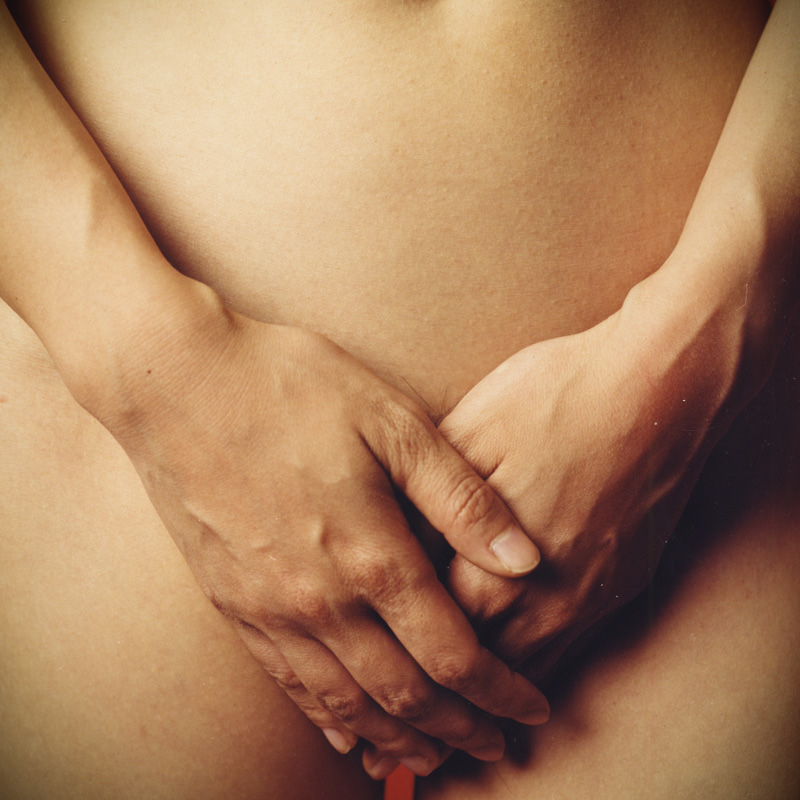
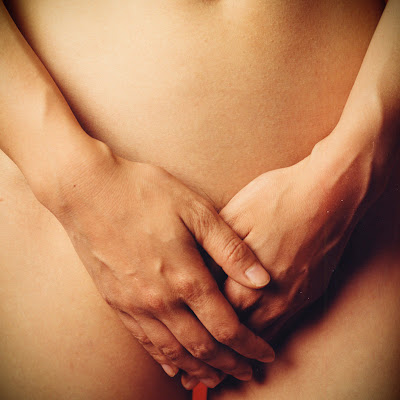
This is the first Tokyo exhibition of the Beijing-based artist Chin-Chin Wu. It features her 2006–2008 project Vis–à -Vis, Portraits of New Women, in which fifty young women from Paris and Beijing posed for their “intimate portraits.” Upon entering the gallery, the viewers are invited to gaze into an aperture in a red lacquered peep-box installed just high enough making it necessary for all under seven feet tall to stand on a small wooden stool. The voyeristic effort is rewarded with a tiny illuminated image set against the back wall of the box. This quick throw back to Marcel Duchamp’s in/famous Etant Donnés, seems to address the elephant-in-the-room inherent in any art featuring female genitalia. Wu questions the inherently voyeuristic nature of viewing nudity just as she asserts the agency of the woman who participated in the Vis–à-Vis shoots by engaging them in a dialogue about the meaning of these portraits. Many of their utterances are featured in the making-of video that is also part of the show. Wu’s photographs are further contextualized by a selection of ten silver gelatin prints by Nobuyoshi Araki, hung in two tight rows. Araki’s work makes for an interesting juxtoposition with Wu’s, in my opinion, because it accentuates the raw sexuality of his work. Next to his, Wu’s photographs, for all their overtness, appear almost chaste: the viewers of her portraits do not need to worry about participating in the predatory visual act, her focus is the aesthetic differentiation.
There are eight large-format ink jet prints on view, with the rest of the project available for perusal in an eponymous publication by GALERIE VEVAIS (edited by Alexander Scholz). The book will be on sale in about one month in both hardcover and softcover versions. You can find additional information about the publication and see more of Chin-Chin’s works on her webpage.
Due to the graphic nature of the show the gallery had to set a series of deterrents for visitors that might seek things other than art enjoyment. If you decide to visit the exhibition (you have to be over 20 years of age), please make an email reservation with the gallery (amanda@zen-foto.jp). When you arrive you will be asked to sign a waver stating that you do not find the contents offensive, and pay an exhibition membership fee of 3000 yen. Once inside you will have your pick of Zen Foto publication to the value of the fee. The show is at Zen Foto Gallery, on view through May 23.
Comments Off on "A. Face 2 Face with Wu Chin-Chin" (and Araki Nobuyoshi) at Zen Foto Gallery
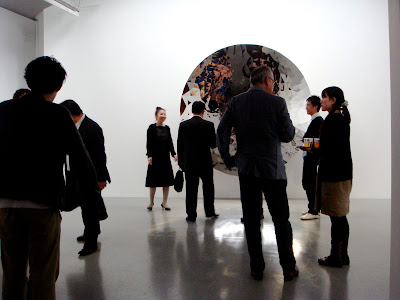
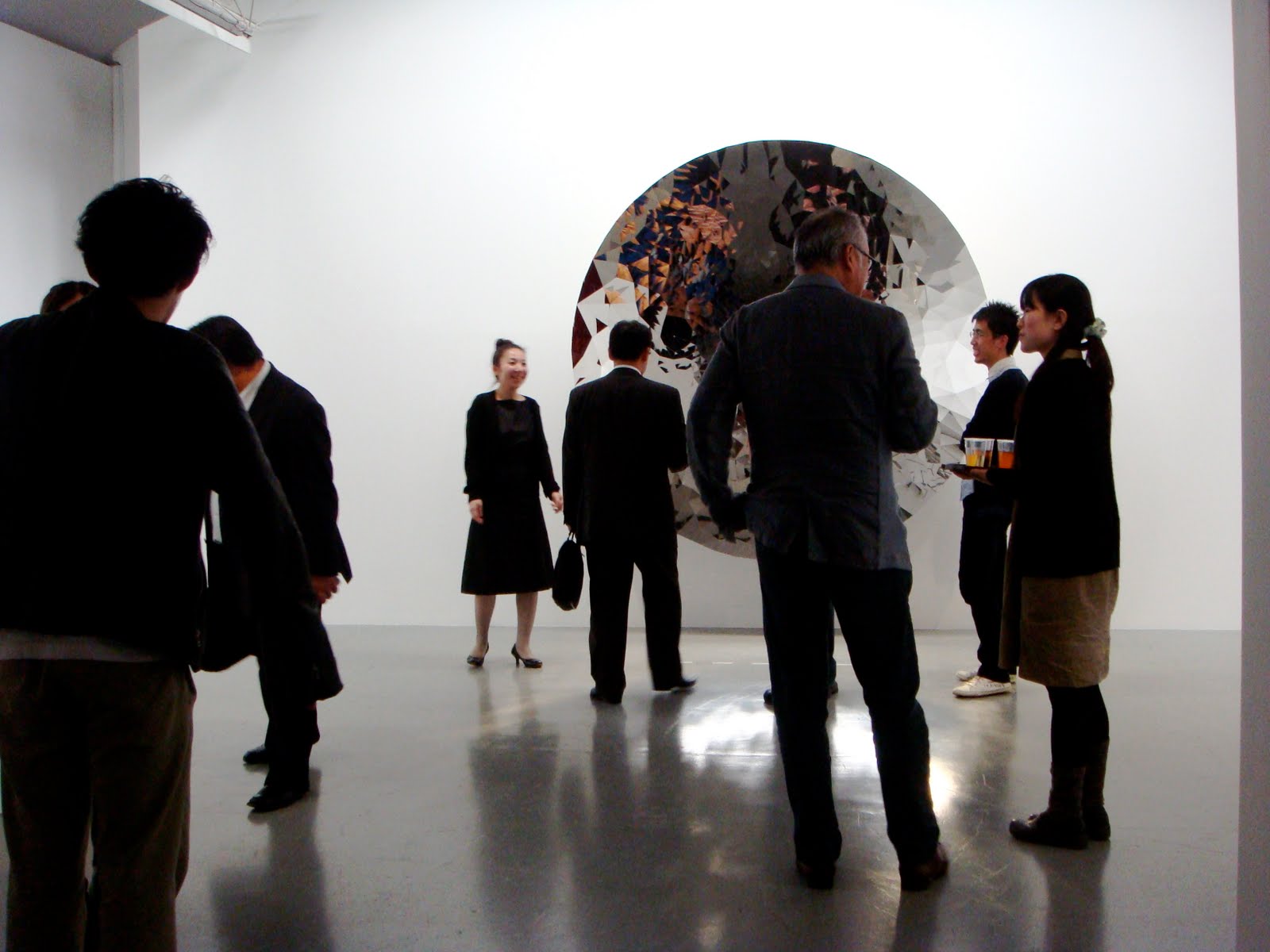
Installation view with mirror piece (Untitled, 2010, stainless steel, 230x230x44 cm)
Anish Kapoor’s third solo exhibition at SCAI THE BATHHOUSE gallery amply proves that his small scale works can be just as effective (if not stunning) as his well publicized large scale installations. The five works on view at the SCAI range from an 1979-80 wood and chalk powder installation to last year’s concave illusion mirror made of numerous stainless steel parts. Just like the giant site-specific sculpture Memory, shown at the Guggenheim Museum in New York, the mirror (Untitled, 2010) engages through more than just vision: as one approaches the object, the acoustic background continues to change relative to the distance and the angle between the sculpture and the viewer’s ear. The effect—something akin to sensory disorientation—is enhanced by the multitude of fragmented reflections whose upward/downward direction changes depending on the distance from the work.
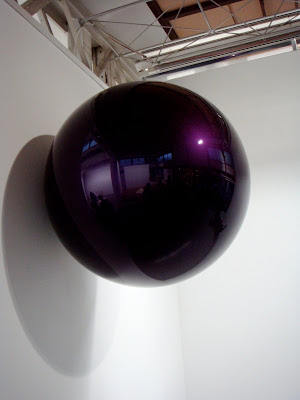
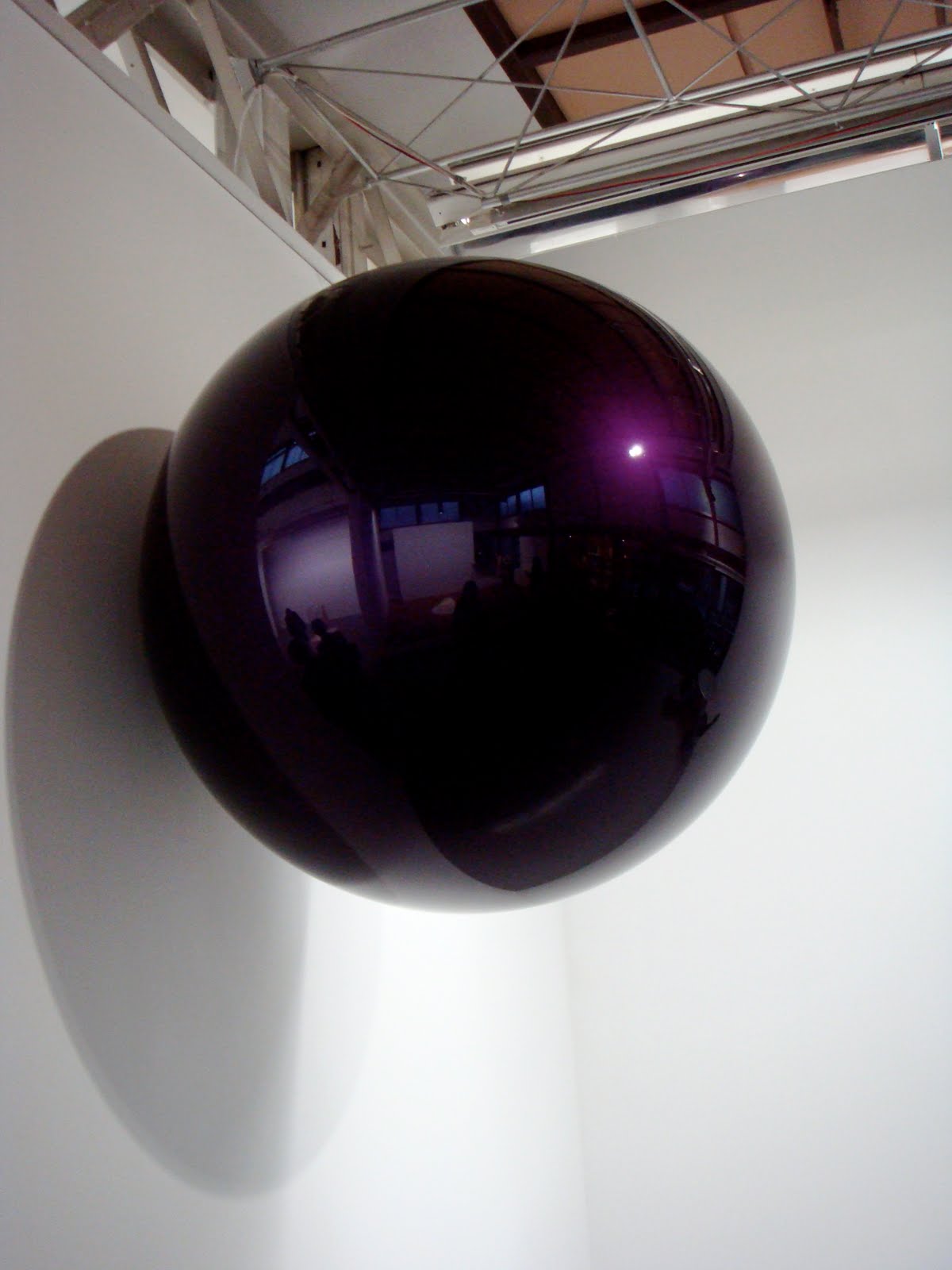
Untitled, 2007, fiberglass, 121.5 cm diameter
A different Untitled, a fiberglass ball is hung exactly 230″ above the floor. Appreciating it requires a suspension of disbelief on the part of the viewer, so the ball could be sequentially read as rolling, hanging or falling. This sculpture, as well as another one, a granite andlacquer piece made in collaboration with a Japanese urushi lacquer wareartist, presents Kapoor’s trademark vortex shape first tried out in the works from the mid 90s. Only now the vortex is not flush with the gallery wall, so the space behind the smooth lacqueredsurface is revealed as it would be in any sculpture-in-round forcing the viewer to follow the initial experience of being pulled towards the implied gap, with that of discovering spatially finite, graspable quality of the work. The artist’s admission to the specificity of the object (as Donald Judd tagged it), offers an alternative to the subliminal quality of Kapoor’s larger works: still phenomenological, the works in the SCAI show afford more than a mere fragmented reflection of his awe-inspiring large scale sculptures.
Comments Off on Anish Kapoor at SCAI THE BATHHOUSE