Wayne Thiebaud at the Legion of Honor

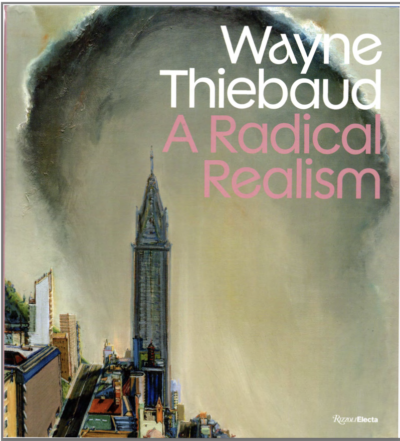
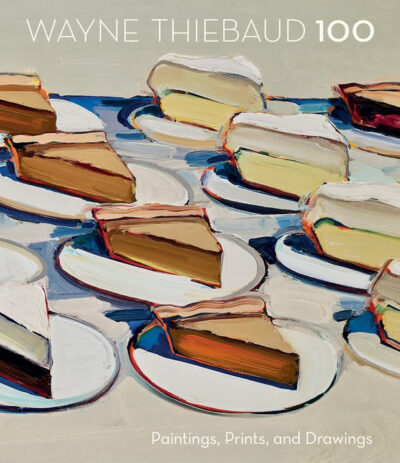
“Wayne Thiebaud: Art Comes from Art,” which opened at the California Palace of the Legion of Honor in San Francisco on March 22, is organized by the Fine Arts Museums of San Francisco and curated by Timothy Anglin Burgard. Its premise, spelled out in the title, is straight forward enough and firmly based on the artist’s own ideas about painting. Wayne Thiebaud (1920–2021) spoke about his debt to other painters on numerous occasions, half-jokingly calling himself an “obsessive thief.” Those who studied and wrote about his work, as well as his students of many decades, are already well aware of Thiebaud’s inextricable connection to art history. Unfortunately, that is not yet true of the public, delighted as they are by his familiar subject matter and the bright palette of his paintings and prints.
While admiring his luscious renditions of deli or haberdashery counters, typical museumgoers (and even some art critics) are still largely content to see his work as a West Coast variety of American Pop Art—a more painterly version of the East Coast’s obsession with hand-rendered imitations of mechanical reproduction (Warhol and Lichtenstein) or commercial cornucopia (Rosenquist and Oldenburg). Despite the painter’s vociferous objections to being called a Pop artist, there are plenty of Thiebaud lovers who pine for comprehensive exhibitions of his “greatest hits” accompanied by reassuring platitudes about the uniqueness of California Pop.
The Legion of Honor exhibition disabuses any attentive visitor of the idea that Thiebaud, although he spent most of his life in California, was a regional painter, a Pop artist, or a popularizer of Americana disconnected from the art of other places and other times. Its portrayal of Thiebaud is familiar to those who had the privilege of knowing him: a worldly, curious intellectual, an art connoisseur, a man of supple mind and a lively sense of humor, and, above all, a “practicing art historian” (his own description of Picasso), whose painting was nearly always a response to the art that captivated him. Thiebaud’s stated goal was to create painting of a “different visual species”—different from the real world and from all other painting, yet informed by both, as well as by the individual world of the painter. “Art Comes from Art” takes the viewer behind the scenes, into Thiebaud’s studio, his classroom, and even his home (where most of his art collection was kept), showing how, according to Tim Burgard, the painter’s “overt homage, covert theft, and intuitive transformation” led to the creation of what Thiebaud himself called his unique and “different visual species.”
To read the entire article, click on the image above.