Following the death of Hilde Lynn Helphenstein, better known as Jerry Gogosian, much of the public discussion focused on the circumstances of her death rather than the ideas she spent years articulating through her work. This essay examines Helphenstein’s place within a broader history of institutional critique, arguing that the Jerry Gogosian project adapted that tradition to the conditions of social media and the contemporary attention economy.
Drawing on her final interviews, podcasts, social media posts, and artworks, the essay explores Helphenstein’s reflections on beauty, branding, conformity, public identity, and the pressures of life lived online. It also considers her relationship to earlier figures such as Hans Haacke and Andrea Fraser, whose investigations of institutional power anticipated many of the questions she would later confront through digital media.
Posted on June 10, 2026, 5:20 PM, by jfriedman, under
art history.
In this response to artist Josh Kline’s essay on the state of American art, I take a closer look at the idea that the art world has recently fallen into crisis. Kline argues that today’s system is no longer able to support artists in meaningful ways. I question that view by looking at the history of modern art and its institutions. From Soviet Constructivism and the WPA to the rise of Abstract Expressionism during the Cold War, art has always depended on political, economic, and institutional support. Rather than seeing current tensions as evidence of a broken system, I argue that they are a longstanding feature of cultural life. The essay challenges common assumptions about artistic independence and asks whether the art world was ever as autonomous as many people imagine.
Posted on December 17, 2025, 9:22 AM, by jfriedman, under
art history.
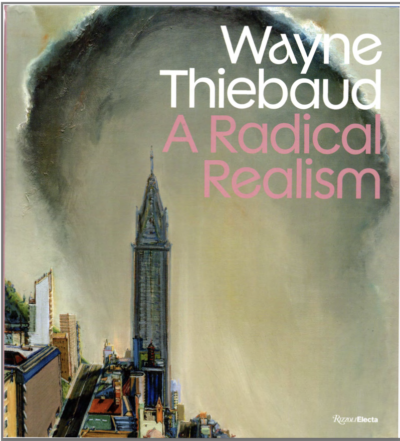
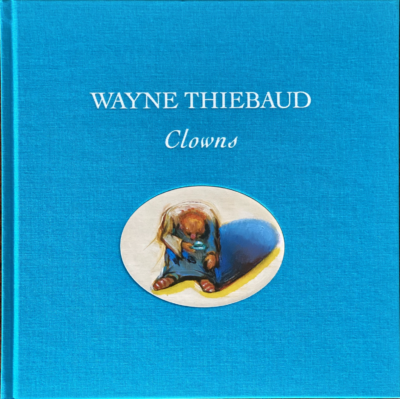
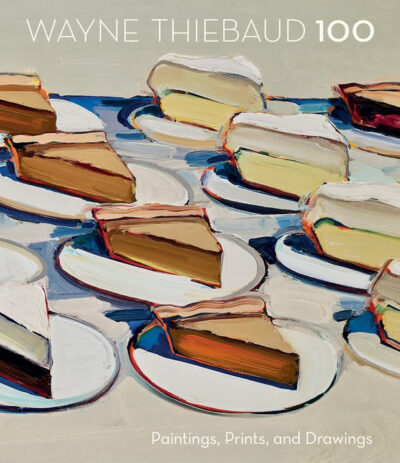
Rejecting sentimental or anecdotal portraiture, Thiebaud cultivates a suspended psychological charge, inviting viewers into the role of Wollheim’s “unrepresented spectator.” His sitters—poised before or after action—occupy pared-down spaces where gesture is displaced by the quiet gravity of presence. Through this deliberate withholding, Thiebaud reanimates classical problems of painting, aligning himself with Velázquez and Manet while translating their concerns into an American vernacular. His figures do not perform; they simply—and profoundly—are.
The notorious 19th-century anarchist Mikhail Bakunin, who proclaimed that “the urge for destruction is also a creative urge,” has found an unlikely disciple in Trump. Considered together, the 1980 and 2025 episodes teach the lesson that destruction can be a form of authorship. Once the reliefs were gone, their loss defined both the building and its destroyer. The erasure became his signature. Between McFadden’s 1980 account of jackhammers and Broadwater’s 2025 image of roaring machinery there stretches a single, continuous story about the aesthetics of demolition.
Walter Benjamin called the twentieth century “the age of mechanical reproduction,” but his contemporaries were still capable of distinguishing between a celebrity’s real personality and her image. The twenty-first century is the age of digital reproduction, and it forces us to ask whether the general public still possesses the capacity to recognize such a distinction. Tyler Robinson’s text messages discuss Kirk’s murder with shocking callousness, but Robinson was no psychopath. It would be less frightening if he was. The truly scary prospect is that his blithe indifference to the value of human life is becoming typical. We appear to have entered the realm of the “posthuman.”
Posted on July 18, 2025, 8:53 PM, by jfriedman, under
art history.
Perhaps this is why Alpers is befuddled by today’s disciplinary confusion in which art, the master, is subjugated by art history, supposedly its emissary. Consider the following remark she made in a 2022 follow-up to the earlier conversation with Ziegler: “I agree with my great, late art historian friend Michael Podro, who said that painting has self-substance that insulates it from events and changes in the world of things—political, religious, or personal. Painting just goes along.”
Posted on July 18, 2025, 8:44 PM, by jfriedman, under
art history.
“Wayne Thiebaud: Art Comes from Art,” which opened at the California Palace of the Legion of Honor in San Francisco on March 22, is organized by the Fine Arts Museums of San Francisco and curated by Timothy Anglin Burgard. Its premise, spelled out in the title, is straight forward enough and firmly based on the […]