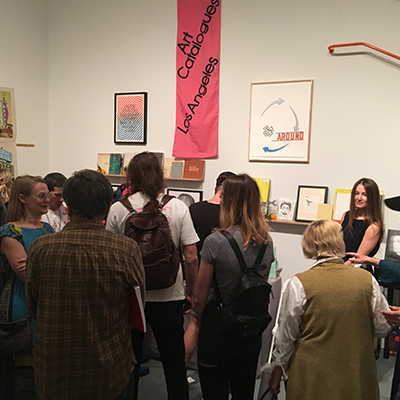
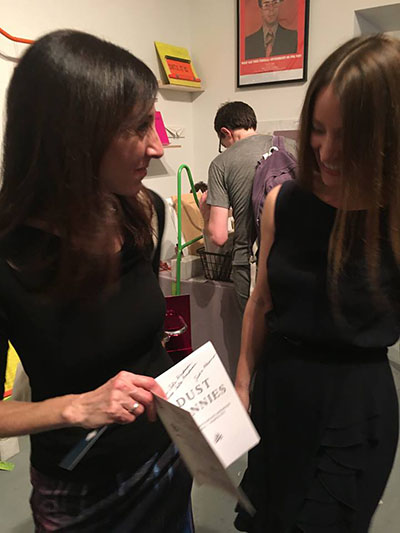
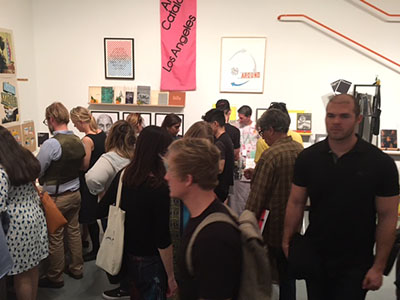
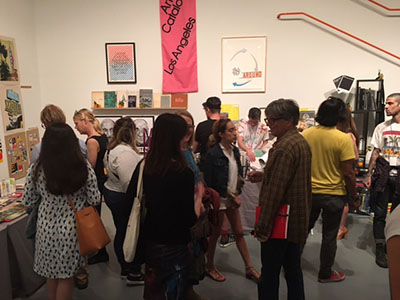
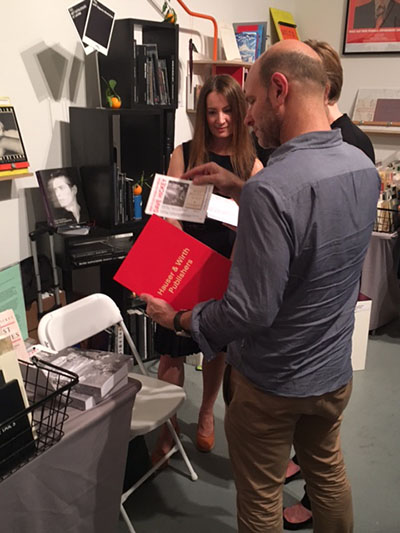
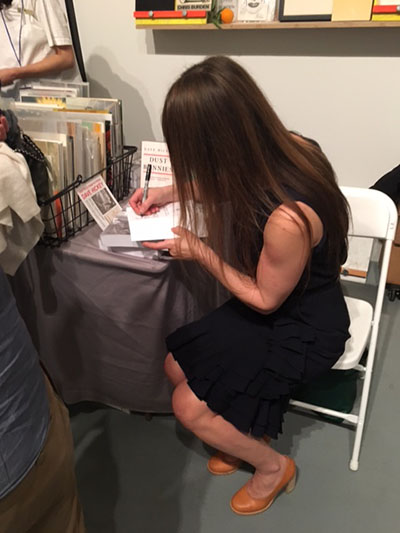
Photos From The CAC (Las Vegas) Discussion With Dave Hickey and Julia Friedman 03.05.2016
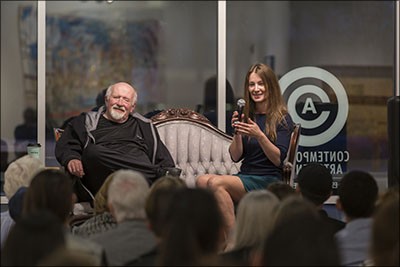
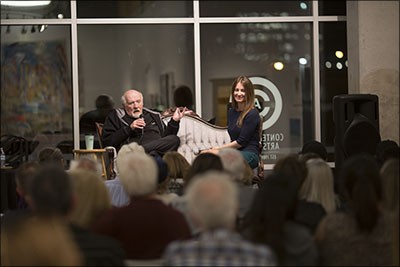
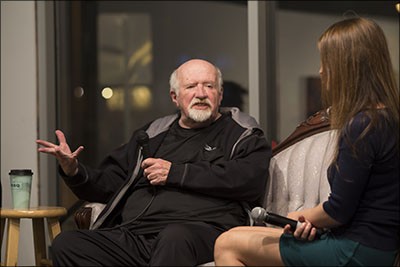
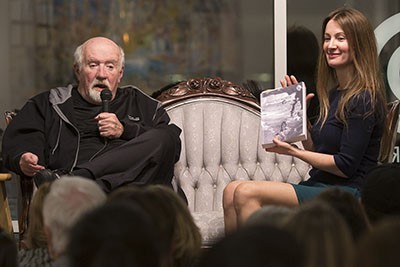
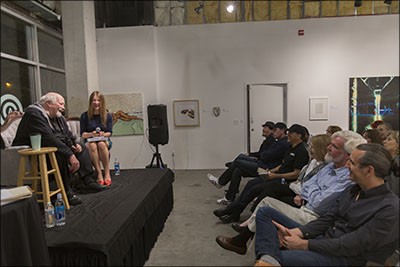
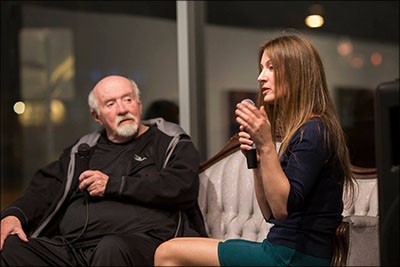
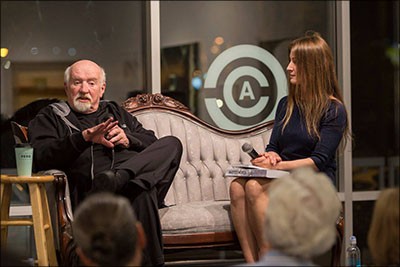
Photos From The CAC (Las Vegas) Discussion With
Dave Hickey and Julia Friedman 03.05.2016
Photos by Checko Salgado
Photos From The CAC (Las Vegas) Discussion With
Dave Hickey and Julia Friedman 03.05.2016
Photos by Checko Salgado
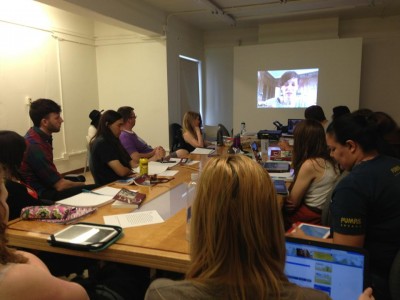
With four more weeks of the course still ahead of us, the Writing Art & Design Criticism seminar students have already had a chance to welcome several well-regarded art critics and art writers, including Lee Ambrozy, the editor-at-large for Artforum.com.cn and the editor and translator of Ai Weiwei’s Blog: Writings, Interviews and Digital Rants 2006–2009 (MIT Press, 2011 http://mitpress.mit.edu/books/
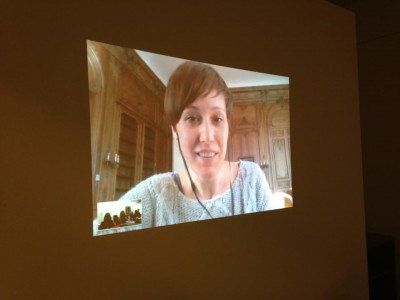
Lee’s visit was followed by that of another Artforum colleague—Michael Ned Holte—a writer and independent curator based in Los Angeles. He is the author of Proper Names(Golden Spike Press). His texts have appeared in numerous publications including Live Art in LA: Performance in Southern California, 1970-1983 (Routledge), In the Shadow of Numbers: Charles Gaines Selected Works from 1975-2012 (Pomona College Museum of Art/Pitzer Art Galleries), Richard Hawkins—Third Mind (Art Institute of Chicago/Yale), and Roy McMakin: When is a Chair Not a Chair (Skira/Rizzoli), as well as print and online periodicals such as Afterall, Artforum International, Art Journal, and East of Borneo. Holte has organized numerous exhibitions including “Temporary Landmarks & Moving Situations” at Expo Chicago; “Support Group” at Thomas Solomon at Cottage Home, Los Angeles; “Laying Bricks” at Wallspace Gallery, New York, and “Celine and Julie Go Boating” at Anna Helwing Gallery, Los Angeles. Along with Connie Butler, he is co-curator of the 2014 edition of “Made in L.A.” at the Hammer Museum, Los Angeles.
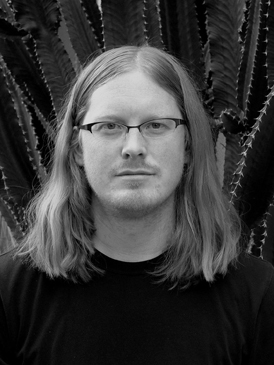
This past Wednesday, the students had a chance to engage with two guests: one from New York, another from Los Angeles. Mat Gleason is well known in the Los Angeles art scene for his fearless art criticism, and the Coagula Art Journal he has been publishing for over two decades. Mat is also a fellow blogger at the Huffington Post, where his profile describes Gleason as a “famously provocative local art critic,” a “maverick,” and “insufferably cynical.”
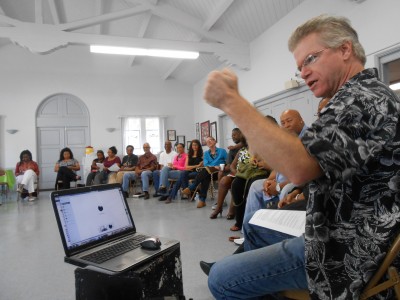
James Panero, based in New York, is is an American cultural critic and the executive editor of The New Criterion. In 1999 he worked in Gstaad, Switzerland as a writing assistant to William F. Buckley Jr on his novel Spytime: The Undoing of James Jesus Angleton (Harcourt, 2000). Before joining The New Criterion in 2001, he was a graduate student in the History of Art and Architecture department at Brown University, where his area of focus was late-nineteenth-century French modernism. James and I shared an advisor, Professor Kermit S. Champa whose untimely passing in 2004 was a loss for all his students. James wrote an obituary article for The New Criterion.
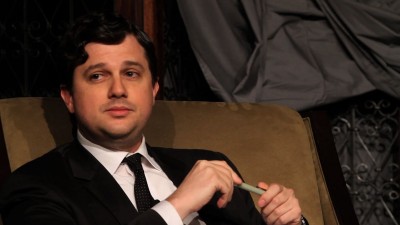
James led an engaging and thought provoking discussion of his recent editorial article “Future Tense VII: What’s a Museum?.”
Our next scheduled seminar guest is Barry Schwabsky, the art critic of The Nation.
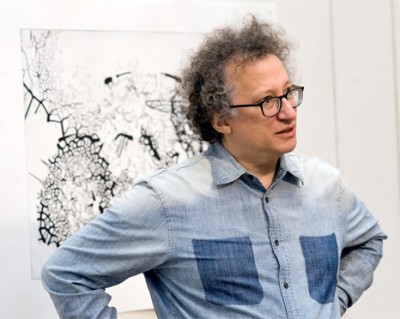
Schwabsky has been writing about art for the Nation since 2005, and his essays have appeared in many other publications, including Flash Art (Milan), Artforum—as an international co-editor he has worked with every one of my own reviews dispatched from Tokyo, the London Review of Books and Art in America. His books include The Widening Circle: Consequences of Modernism in Contemporary Art, Vitamin P: New Perspectives in Painting and several volumes of poetry, the most recent being Book Left Open in the Rain (Black Square Editions/The Brooklyn Rail). Schwabsky has contributed to books and catalogs on artists such as Henri Matisse, Alighiero Boetti, Jessica Stockholder and Gillian Wearing, and has taught at the School of Visual Arts, Pratt Institute, New York University, Goldsmiths College (University of London) and Yale University. We have been reading chapters from his most recent book Words for Art (Sternberg Press, 2013) throughout the semester, and it will certainly be a treat to welcome him at ASU, albeit virtually. Viva Skype!
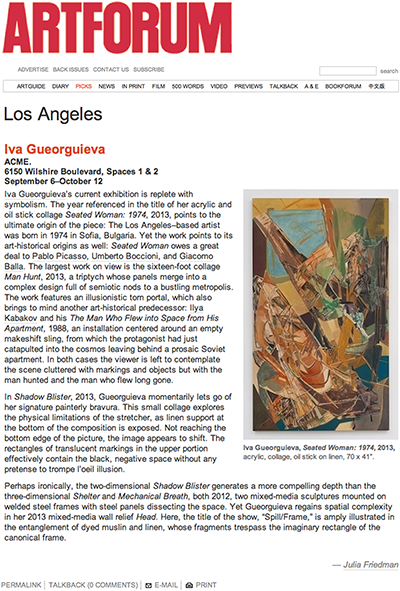
My Critics’ Pick on LA based Bulgarian born artist Iva Gueorguieva is now up on Artforum’s website.
.
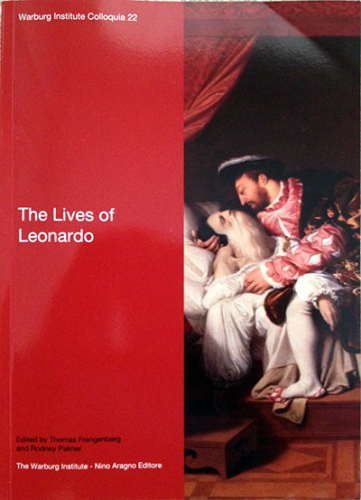
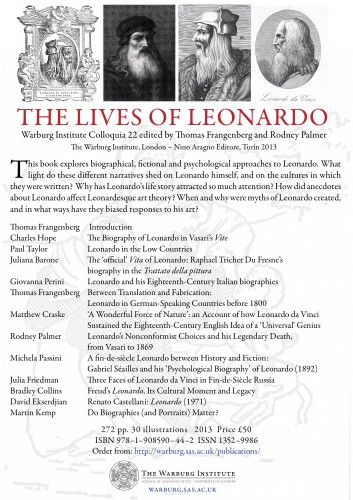
Congratulations to the editors Prof. Thomas Frangenberg and Dr. Rodney Palmer on the release of The Lives of Leonardo book, published as part of Warburg Institute Colloquia series. I am honored to participate in the project with an article on the Russian reception of the artist entitled “Three Faces of Leonardo da Vinci in Fin-de-Siecle Russia.”
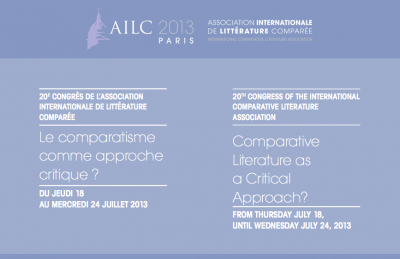
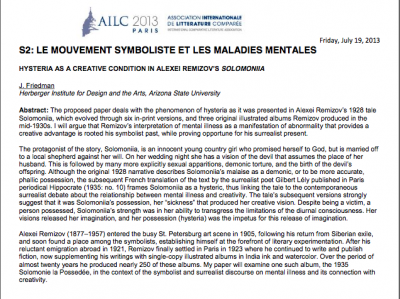
I finally had a chance to present a paper on one of the most interesting subjects I researched while writing my Remizov book. It has to do with the notion that the so-called hysteria (a diagnosis liberally dispensed to female patience for the good part of the late 19th and early 20th century), is in fact a condition that signals creativity, a performative form of expression akin to artistic expression.
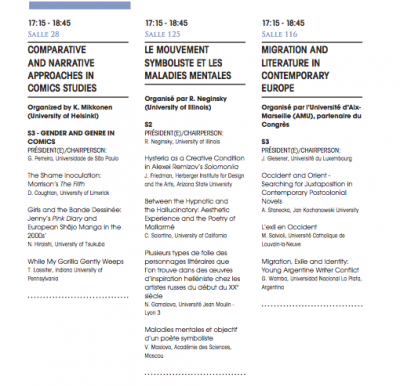
Remizov’s understanding of hysteria and creativity bridges symbolist and surrealist interpretations of mental illness. His version hysteria/possession/creative release was at once a dialogue with contemporaneous artists, particulary French surrealists, and the reevaluation of symbolist notions of mental illness. Please see the abstract below.
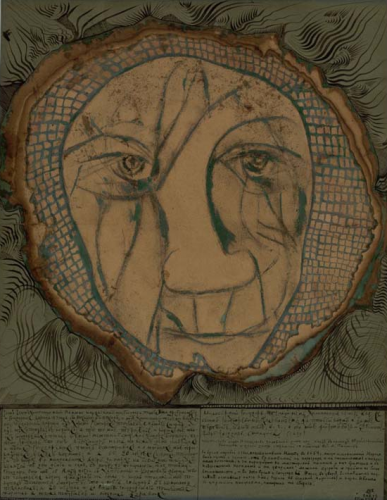
Alexei Remizov, Ivashka, Paris, 1941, India ink and color pencil on paper
It is official: the Russian Ministry of Culture finally purchased the Reznikoff family archive in its entirety, including nine illustrated albums created by Alexei Remizov between the mid 1930s and early 50s. Some of these illustrated albums from the Reznikoff collection are at the base of my monograph Beyond Symbolism and Surrealism: Alexei Remizov’s Synthetic Art published by Northwestern UP in 2011.
Before its purchase, the Reznikoff archive was the largest repository of Remizov materials abroad. Its transfer to the Russian Ministry of Culture completes the existing collection already in the Pushkin House (The Institute of Russian Literature) in St. Petersburg. Remizov donated this portion of his archive to the Pushkin House shortly before his death in Paris in 1957. The remaining part was left in the care of the Reznikoff family, who not only helped the writer and his wife to survive the physical hardships of exile, but at the price of personal sacrifices, enabled a series of post-war printings of Remizov’s books containing his own covers and illustrations.
Now, the Moscow Manezh is hosting an exhibit “Alexei Rimizov. The Return” that showcases a selection of works from the the recent Reznikoff purchase. The exhibition is organized by Irina Alpatova, and will be open through May 22, 2013.



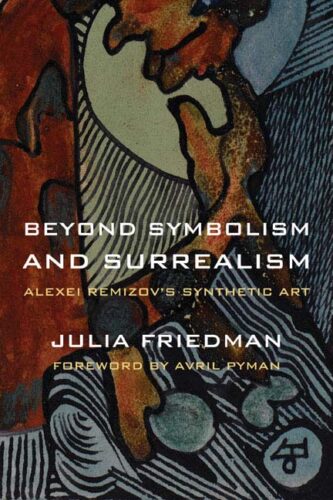
The great modernist eccentric Alexei Remizov was a “writers’ writer” whose innovative poetic prose has long since entered the Russian literary canon. Gradually expanding his working methods to make drawing an integral part of the writing process, during the 1930s and 1940s, Remizov created hundreds of albums that combined texts with collages and india ink and watercolor illustrations. (more) Northwestern University Press 7 x 10, 300 pgs, Trade Cloth ISBN 0-8101-2617-6 / $69.95
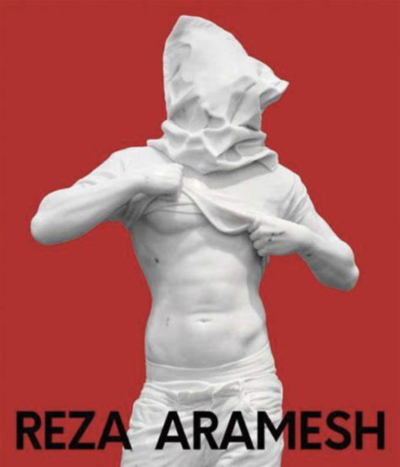
Skira Editore Milano just published a monograph on British-Iranian artist Reza Aramesh. In addition to several texts, and an interview with the artist, ACTION: BY NUMBER contains a catalogue raisonné of his work from 2002 onwards, including Aramesh’s recent marble sculpture. I discuss the art-historical genesis and cultural meaning of these spectacular and frightening works in my essay “The Meta of Marble.” (pp.124–129). SKIRA Editore Milano Hardcover. 248 pages, 153 ill., size 24x28cm ISBN 978-88-572-5285-8
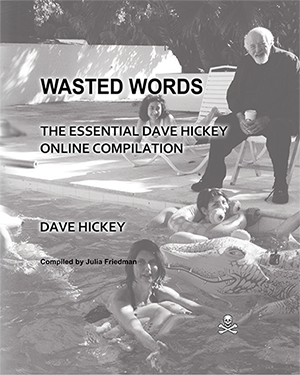
Between June 2014 and April 2015, Dave Hickey posted almost 3,000 digital comments on social media, prompting nearly 700,000 words in response from art lovers, acolytes, and skeptics. Wasted Words is an unedited comprehensive transcript of these exchanges. This polyphonic digital discourse reveals the range of Hickey’s strong opinions, as he embarks on a crypto-enlightenment project for the benefit of "dunces" and "pricks." Paperback, 586 pages, 2016 ISBN-10: 1517287103
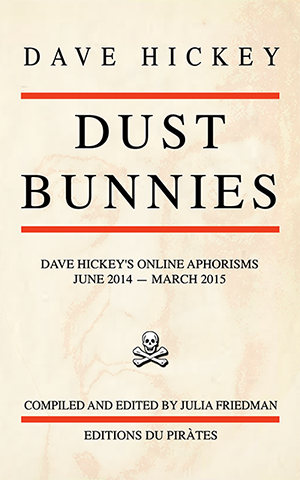
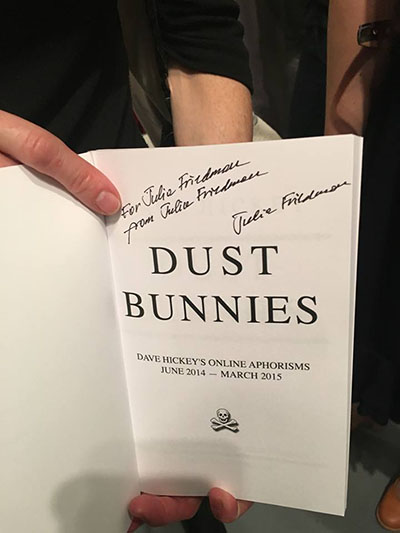
Dustbunnies is an assemblage of “swept up” fragments that came from a vast digital discourse that took place in Dave Hickey’s social media space between June 2014 and March 2015. During that time Hickey posted almost 3,000 comments, prompting nearly 700,000 words in response from art lovers, acolytes and skeptics. Wasted Words, the resulting volume, is an unedited comprehensive transcript of these exchanges. Its pendant publication, Dustbunnies, distills Hickey’s richly aphoristic comments, extracted from various discussion threads. Paperback, 124 pages, 2016 ISBN-10: 152327266X
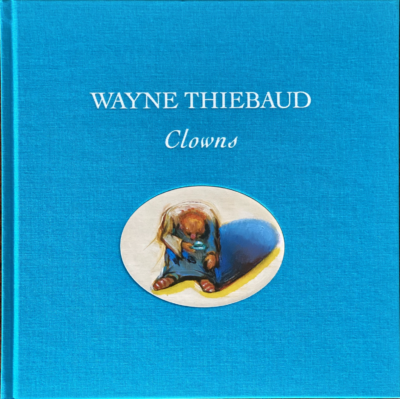
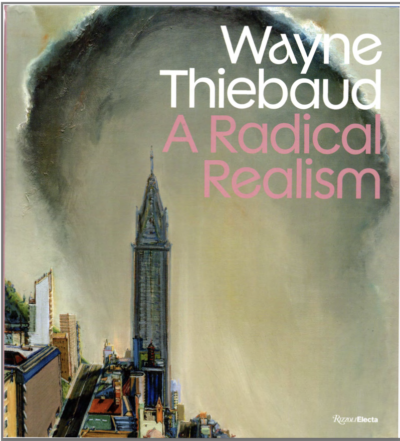
Over the past seven years Wayne Thiebaud has made dozens of paintings, drawings, and etchings of clowns. Like much of his work, this latest series is in a sense autobiographical. During his boyhood in Long Beach he looked forward to the visits of a traveling Ringling Brothers circus and sometimes helped out behind the scenes in exchange for tickets. The costumes, faces, and antics of the clowns were the beginning of a lifelong fascination for him. The clown series is its culmination, in which the now 100-year-old artist revisits those early memories. In December 2019 Wayne Thiebaud unveiled a selection from his clown series at the San Francisco gallery founded by his son, Paul Thiebaud. The Laguna Art Museum exhibition will be a version of the Paul Thiebaud Gallery exhibition, featuring more than forty works. Fully illustrated with 56 artwork reproductions. Essay by Dr. Julia Friedman. Interview with the artist by Janet Bishop, the Thomas Weisel Family Chief Curator and Curator of Painting and Sculpture at San Francisco Museum of Modern Art. Hardcover: 100 pages; ISBN-10: 0578798573ISBN-13: 978-0578798578
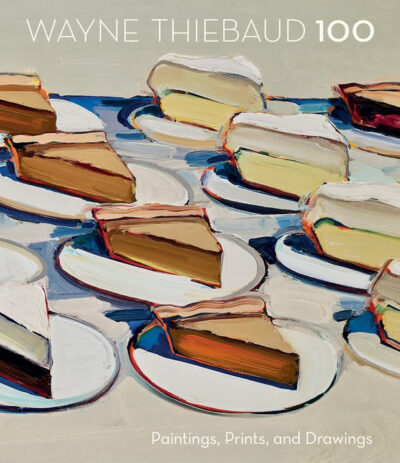
Celebrating the 100th birthday of one of America's most respected and beloved artists, Wayne Thiebaud 100: Paintings, Prints, and Drawings honors a lifetime of extraordinary achievements across many genres. Best known for his tantalizing paintings of desserts, Thiebaud has long been affiliated with Pop Art, though his body of work is far more expansive, continuing to grow as the artist approaches his milestone birthday. Across the decades, Thiebaud has explored various details of American life through his art from urban views and rural landscapes to clowns and household items all the time continuing to explore the food subjects that made him famous. Wayne Thiebaud 100 accompanies an exhibition of the same name, organized by the Crocker Art Museum. In addition to the 100 paintings, prints, and drawings featured in the exhibition, this publication includes numerous other contextual paintings by Thiebaud, art by the masters who inspired him, and photographs of the artist with family and friends, taken over the course of his extraordinary career. Hardcover : 212 pages ISBN-10 : 1087501172 Dimensions : 9.8 x 0.9 x 11.3 inches ISBN-13 : 978-1087501178
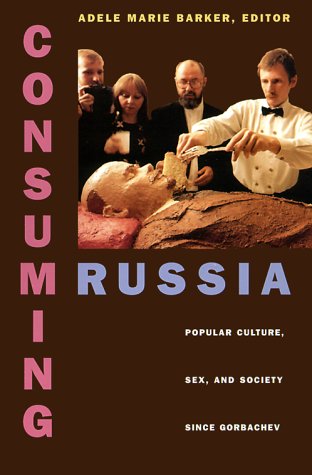
Consuming Russia: Popular Culture, Sex, and Society since Gorbachev Adele Marie Barker (Editor), Eliot Borenstein (Contributor), Julia Friedman (Contributor), Adam Weiner (Contributor), Elizabeth Kristofovich Zelensky (Contributor), Robert Edelman (Contributor) With the collapse of the Soviet empire in the late 1980s, the Russian social landscape has undergone its most dramatic changes since the Bolshevik Revolution in 1917, turning the once bland and monolithic state-run marketplace into a virtual maze of specialty shops—from sushi bars to discotheques and tattoo parlors... (more) Paperback: 488 pages Publisher: Duke University Press Books (June 10, 1999) Language: English ISBN-10: 0822323133 ISBN-13: 978-0822323136
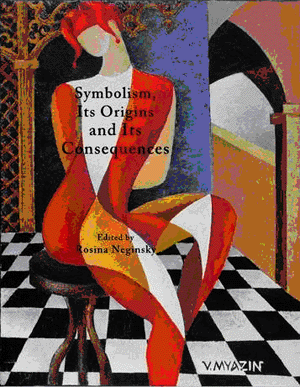
“A Powerless Seeker: Merezhkovsky’s Romance as Life-Writing” by Julia Friedman In Symbolism, its Origins and Consequences. Edited by Rosina Neginsky. Cambridge: Cambridge Scholars, 2010 Hardcover: 665 pages Publisher: Cambridge Scholars Publishing New edition edition (October 1, 2010) Language: English ISBN-10: 1443823929 ISBN-13: 978-1443823920
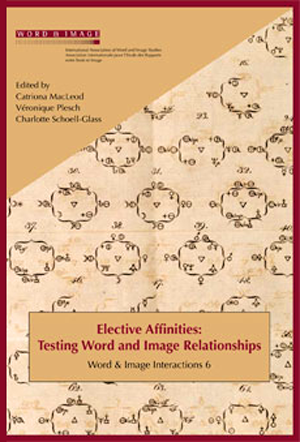
“The Writing-Drawing Continuum of Alexei Remizov,” by Julia Friedman "Elective affinities" - a notion originally borrowed by Goethe for his 1809 novel of the same title from eighteenth-century chemistry - here refers to the active role of the two partners in the relationship of the pictorial and the verbal... In In Elective Affinities: Word & Image Interactions 6, 2008 Edited by Catriona McLeod, Véronique Plesch and Charlotte Schoell-Glass. Amsterdam and Atlanta: Rodopi Paperback: 422 pages Publisher: Rodopi (June 20, 2009) Language: English ISBN-10: 9042026189 ISBN-13: 978-9042026186
“Alexei Remizov’s Creative Act,” by Julia Friedman. Edited by Maurice Geracht and Frédéric Ogée. In Interfaces: Image Text Language, vol. 29, 2010
 Julia Friedman