Miwa Yanagi ARTFORUM review

My review of Miwa Yanagi’s recent “Lullaby” exhibition at the Rat Hole Gallery is now out in the May issue of Artforum.


Contact Zone by Yukihiro Taguchi: installation view, main gallery
Last Saturday Gallery aαM inaugurated the first in the series of six shows united under the name of “Complex Circuit.” The first artist is Yukihiro Taguchi, a Geidai graduate based in Berlin. Taguchi describes his work as performative installation. This exhibition consists of an installation of (locally) found objects, a video set up of a stop-frame animation showing the assemblage process, and several projectors that allow to generate shadows that are, perhaps, the main subject of the show. During my visit to the gallery the artist, along with several friends and assistants, held a circle performance, very much in he spirit of Fluxus.
The performative aspect is crucial to the project: Taguchi will keep rearranging the environment for the duration of the show. His other recent work involves experimentation with various materials including a collaborative fabric installation with the fashion designer Vladimir Karaleev (Fabric/k, 2008), a deconstructed performative installation of floor boards fitted in and around a building in Berlin (Moment, 2007), and another one produced out of air ducts (Nest, 2008). I found his approach very “constructivist,” it seems to me that Taguchi’s work is driven, to a large degree, by materials. When compared with the recent projects from Berlin, this installation strikes as precise and gritty at once reflecting the clash of intricate optics and humble salvaged objects that are made to coexist in the same space.


An Unseen Land or It Is All Gone In Reality, 2009-2010, Negative/Positive Still Projection, Dimension: variable






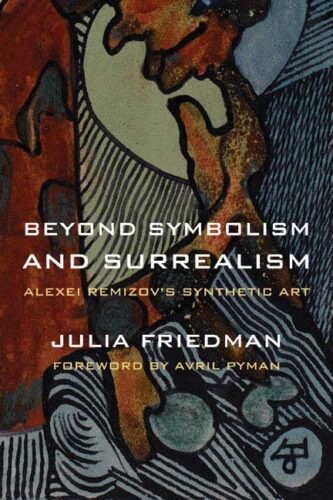
The great modernist eccentric Alexei Remizov was a “writers’ writer” whose innovative poetic prose has long since entered the Russian literary canon. Gradually expanding his working methods to make drawing an integral part of the writing process, during the 1930s and 1940s, Remizov created hundreds of albums that combined texts with collages and india ink and watercolor illustrations. (more) Northwestern University Press 7 x 10, 300 pgs, Trade Cloth ISBN 0-8101-2617-6 / $69.95
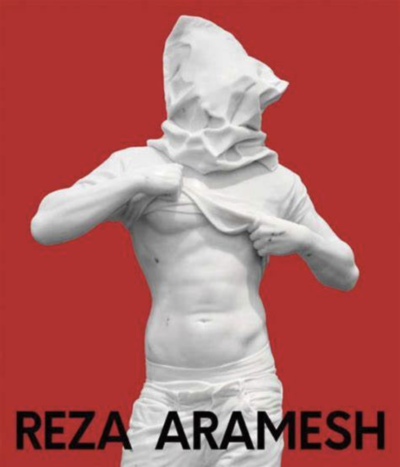
Skira Editore Milano just published a monograph on British-Iranian artist Reza Aramesh. In addition to several texts, and an interview with the artist, ACTION: BY NUMBER contains a catalogue raisonné of his work from 2002 onwards, including Aramesh’s recent marble sculpture. I discuss the art-historical genesis and cultural meaning of these spectacular and frightening works in my essay “The Meta of Marble.” (pp.124–129). SKIRA Editore Milano Hardcover. 248 pages, 153 ill., size 24x28cm ISBN 978-88-572-5285-8
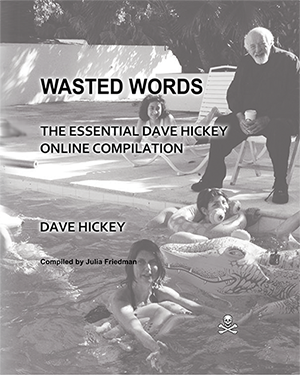
Between June 2014 and April 2015, Dave Hickey posted almost 3,000 digital comments on social media, prompting nearly 700,000 words in response from art lovers, acolytes, and skeptics. Wasted Words is an unedited comprehensive transcript of these exchanges. This polyphonic digital discourse reveals the range of Hickey’s strong opinions, as he embarks on a crypto-enlightenment project for the benefit of "dunces" and "pricks." Paperback, 586 pages, 2016 ISBN-10: 1517287103
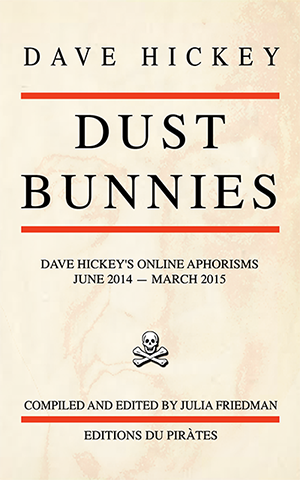
Dustbunnies is an assemblage of “swept up” fragments that came from a vast digital discourse that took place in Dave Hickey’s social media space between June 2014 and March 2015. During that time Hickey posted almost 3,000 comments, prompting nearly 700,000 words in response from art lovers, acolytes and skeptics. Wasted Words, the resulting volume, is an unedited comprehensive transcript of these exchanges. Its pendant publication, Dustbunnies, distills Hickey’s richly aphoristic comments, extracted from various discussion threads. Paperback, 124 pages, 2016 ISBN-10: 152327266X
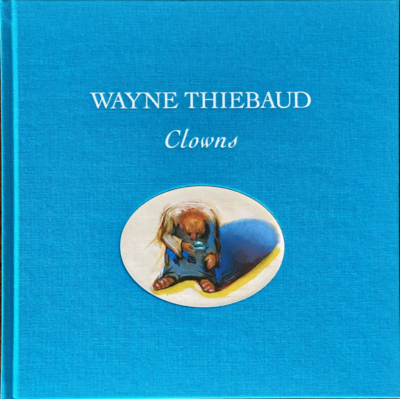
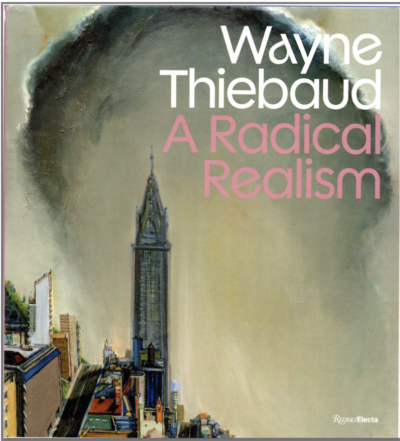
Over the past seven years Wayne Thiebaud has made dozens of paintings, drawings, and etchings of clowns. Like much of his work, this latest series is in a sense autobiographical. During his boyhood in Long Beach he looked forward to the visits of a traveling Ringling Brothers circus and sometimes helped out behind the scenes in exchange for tickets. The costumes, faces, and antics of the clowns were the beginning of a lifelong fascination for him. The clown series is its culmination, in which the now 100-year-old artist revisits those early memories. In December 2019 Wayne Thiebaud unveiled a selection from his clown series at the San Francisco gallery founded by his son, Paul Thiebaud. The Laguna Art Museum exhibition will be a version of the Paul Thiebaud Gallery exhibition, featuring more than forty works. Fully illustrated with 56 artwork reproductions. Essay by Dr. Julia Friedman. Interview with the artist by Janet Bishop, the Thomas Weisel Family Chief Curator and Curator of Painting and Sculpture at San Francisco Museum of Modern Art. Hardcover: 100 pages; ISBN-10: 0578798573ISBN-13: 978-0578798578
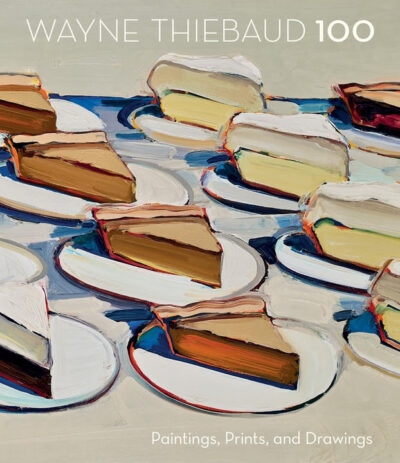
Celebrating the 100th birthday of one of America's most respected and beloved artists, Wayne Thiebaud 100: Paintings, Prints, and Drawings honors a lifetime of extraordinary achievements across many genres. Best known for his tantalizing paintings of desserts, Thiebaud has long been affiliated with Pop Art, though his body of work is far more expansive, continuing to grow as the artist approaches his milestone birthday. Across the decades, Thiebaud has explored various details of American life through his art from urban views and rural landscapes to clowns and household items all the time continuing to explore the food subjects that made him famous. Wayne Thiebaud 100 accompanies an exhibition of the same name, organized by the Crocker Art Museum. In addition to the 100 paintings, prints, and drawings featured in the exhibition, this publication includes numerous other contextual paintings by Thiebaud, art by the masters who inspired him, and photographs of the artist with family and friends, taken over the course of his extraordinary career. Hardcover : 212 pages ISBN-10 : 1087501172 Dimensions : 9.8 x 0.9 x 11.3 inches ISBN-13 : 978-1087501178
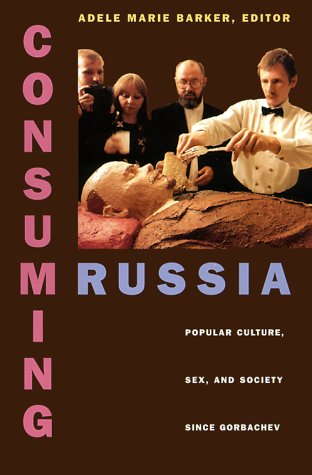
Consuming Russia: Popular Culture, Sex, and Society since Gorbachev Adele Marie Barker (Editor), Eliot Borenstein (Contributor), Julia Friedman (Contributor), Adam Weiner (Contributor), Elizabeth Kristofovich Zelensky (Contributor), Robert Edelman (Contributor) With the collapse of the Soviet empire in the late 1980s, the Russian social landscape has undergone its most dramatic changes since the Bolshevik Revolution in 1917, turning the once bland and monolithic state-run marketplace into a virtual maze of specialty shops—from sushi bars to discotheques and tattoo parlors... (more) Paperback: 488 pages Publisher: Duke University Press Books (June 10, 1999) Language: English ISBN-10: 0822323133 ISBN-13: 978-0822323136
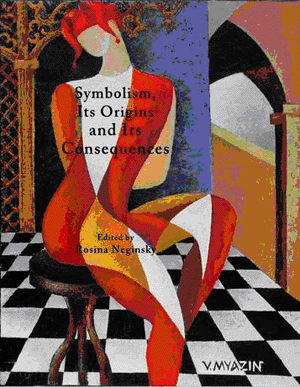
“A Powerless Seeker: Merezhkovsky’s Romance as Life-Writing” by Julia Friedman In Symbolism, its Origins and Consequences. Edited by Rosina Neginsky. Cambridge: Cambridge Scholars, 2010 Hardcover: 665 pages Publisher: Cambridge Scholars Publishing New edition edition (October 1, 2010) Language: English ISBN-10: 1443823929 ISBN-13: 978-1443823920
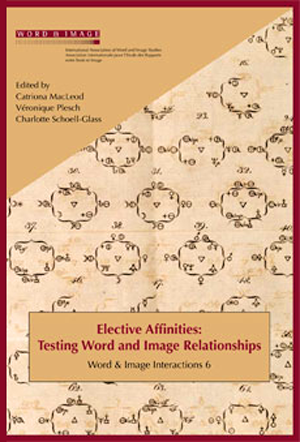
“The Writing-Drawing Continuum of Alexei Remizov,” by Julia Friedman "Elective affinities" - a notion originally borrowed by Goethe for his 1809 novel of the same title from eighteenth-century chemistry - here refers to the active role of the two partners in the relationship of the pictorial and the verbal... In In Elective Affinities: Word & Image Interactions 6, 2008 Edited by Catriona McLeod, Véronique Plesch and Charlotte Schoell-Glass. Amsterdam and Atlanta: Rodopi Paperback: 422 pages Publisher: Rodopi (June 20, 2009) Language: English ISBN-10: 9042026189 ISBN-13: 978-9042026186
“Alexei Remizov’s Creative Act,” by Julia Friedman. Edited by Maurice Geracht and Frédéric Ogée. In Interfaces: Image Text Language, vol. 29, 2010
 Julia Friedman


