Posted on June 21, 2026, 8:21 PM, by jfriedman, under
art history.
Hockney’s own favorite story made the case better than any critic could: a ceramic owl by Picasso, he liked to point out, contains far less visual information than a stuffed specimen, yet it captures something the stuffed bird never will—the experience of a human being looking. Everything he made afterward was an argument for that distinction. The conviction that pictures should register perception rather than mimic mechanical record is what let him move between such different work without ever really changing subjects: an opera set where dragons live in the architecture instead of standing around as props, a Yorkshire hawthorn that only gives up its structure to someone who has looked at it for years, not seconds. Hockney’s recurring joke—that Caravaggio invented Hollywood lighting—was never really a joke. It was the same claim every time: that looking is a discipline, and that painting is still the best instrument we have for doing it.
Posted on June 10, 2026, 5:20 PM, by jfriedman, under
art history.
In this response to artist Josh Kline’s essay on the state of American art, I take a closer look at the idea that the art world has recently fallen into crisis. Kline argues that today’s system is no longer able to support artists in meaningful ways. I question that view by looking at the history of modern art and its institutions. From Soviet Constructivism and the WPA to the rise of Abstract Expressionism during the Cold War, art has always depended on political, economic, and institutional support. Rather than seeing current tensions as evidence of a broken system, I argue that they are a longstanding feature of cultural life. The essay challenges common assumptions about artistic independence and asks whether the art world was ever as autonomous as many people imagine.
In 2026, the viral photograph of the former prince briefly entered the Louvre, but only to intensify its existing meaning by borrowing the institution’s authority. That shift tells us less about the guilt of the individuals involved than it does about the evolution of spectacle itself. Above all, it suggests an ominous, growing impatience with ambiguity.
Posted on December 17, 2025, 9:22 AM, by jfriedman, under
art history.
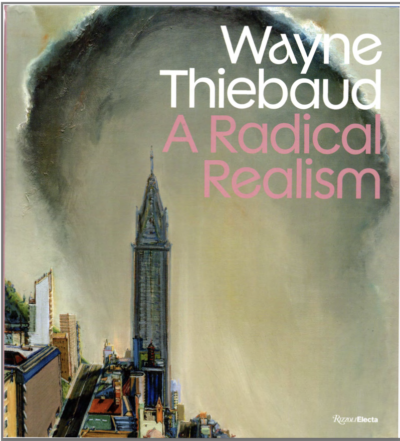
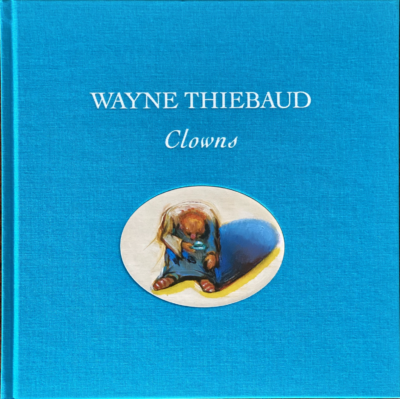
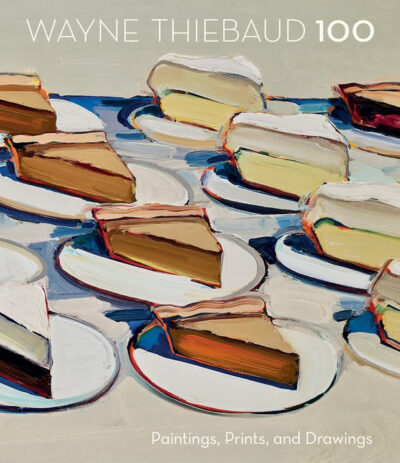
Rejecting sentimental or anecdotal portraiture, Thiebaud cultivates a suspended psychological charge, inviting viewers into the role of Wollheim’s “unrepresented spectator.” His sitters—poised before or after action—occupy pared-down spaces where gesture is displaced by the quiet gravity of presence. Through this deliberate withholding, Thiebaud reanimates classical problems of painting, aligning himself with Velázquez and Manet while translating their concerns into an American vernacular. His figures do not perform; they simply—and profoundly—are.
Posted on July 18, 2025, 8:53 PM, by jfriedman, under
art history.
Perhaps this is why Alpers is befuddled by today’s disciplinary confusion in which art, the master, is subjugated by art history, supposedly its emissary. Consider the following remark she made in a 2022 follow-up to the earlier conversation with Ziegler: “I agree with my great, late art historian friend Michael Podro, who said that painting has self-substance that insulates it from events and changes in the world of things—political, religious, or personal. Painting just goes along.”
Posted on July 18, 2025, 8:44 PM, by jfriedman, under
art history.
“Wayne Thiebaud: Art Comes from Art,” which opened at the California Palace of the Legion of Honor in San Francisco on March 22, is organized by the Fine Arts Museums of San Francisco and curated by Timothy Anglin Burgard. Its premise, spelled out in the title, is straight forward enough and firmly based on the […]
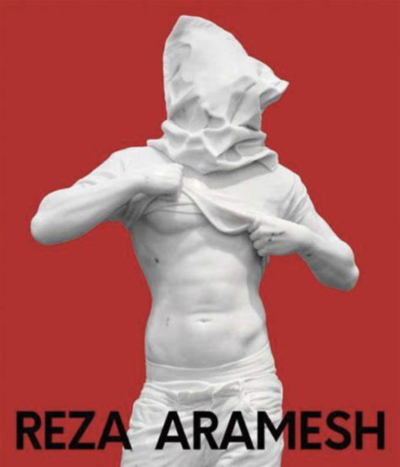
When British sculptor Thomas J Price explains that his “strategy of inclusion” will counter the “endless stream of limiting tropes and identities for Black people,” he is inadvertently mimicking totalitarian injunctions.